

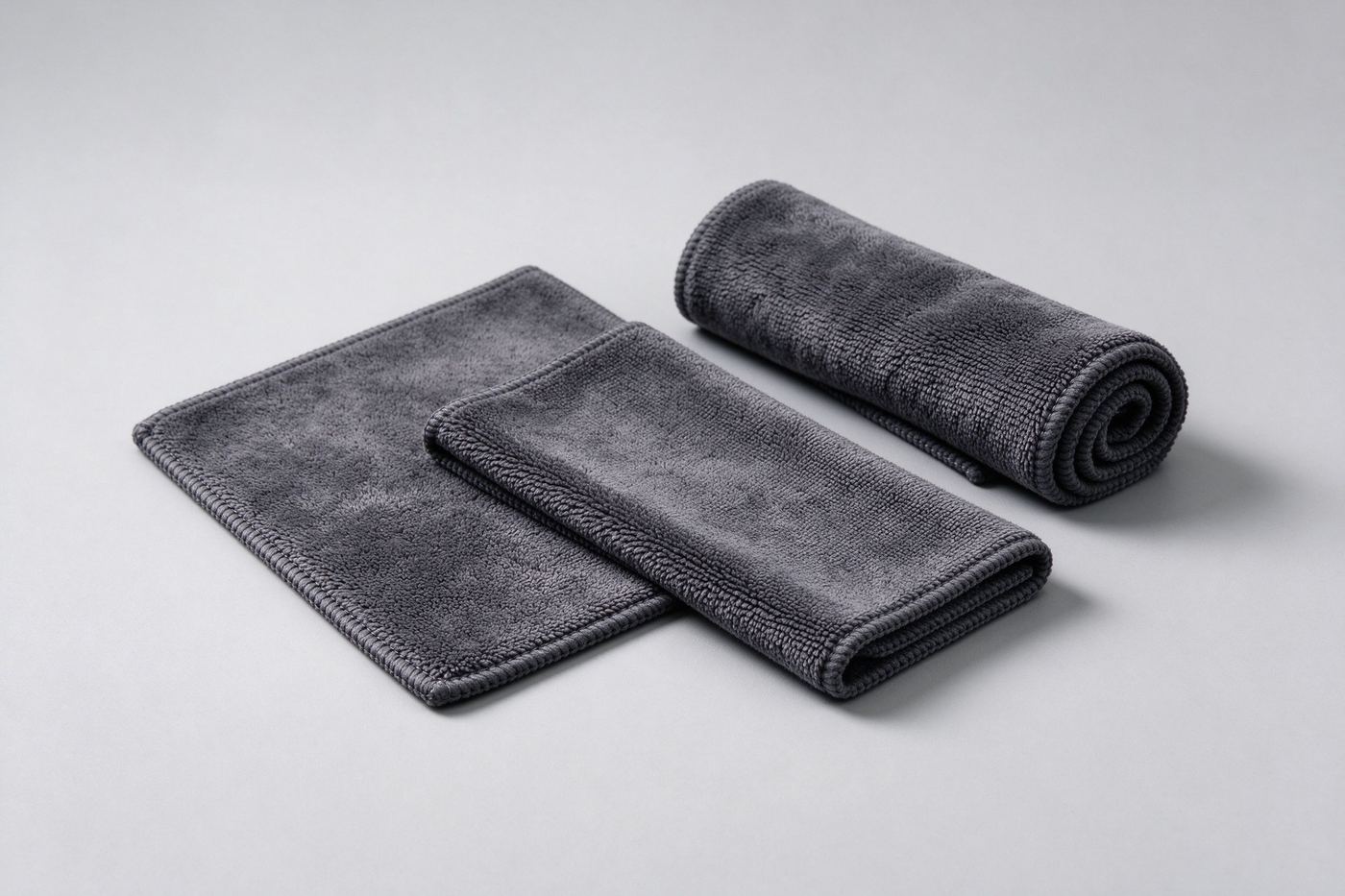
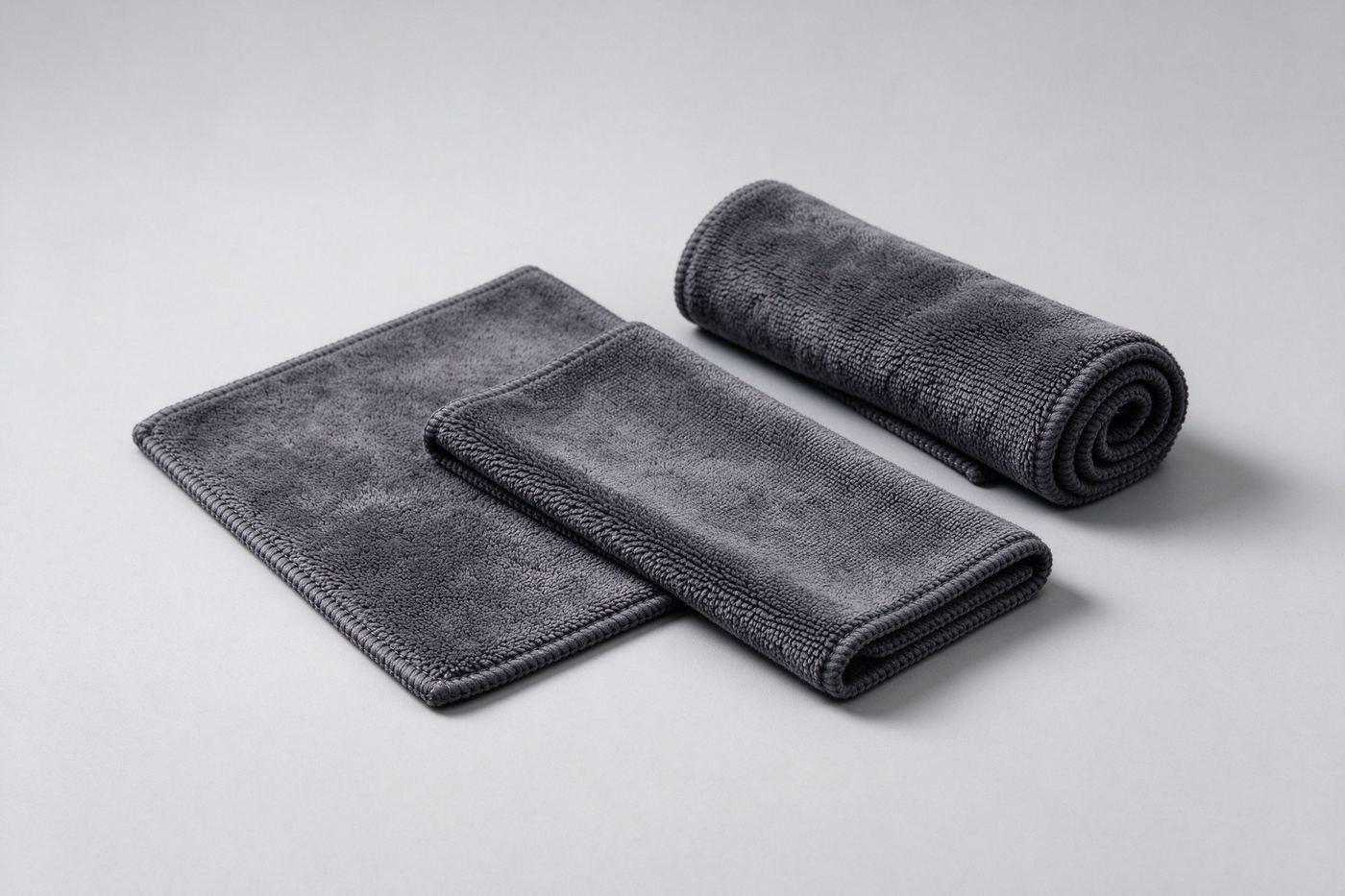
Three cloths, 16 × 16 in (40 × 40 cm) — one for glass, one for trim, one for the dirtier jobs.
The cloth is what leaves the mess behind.
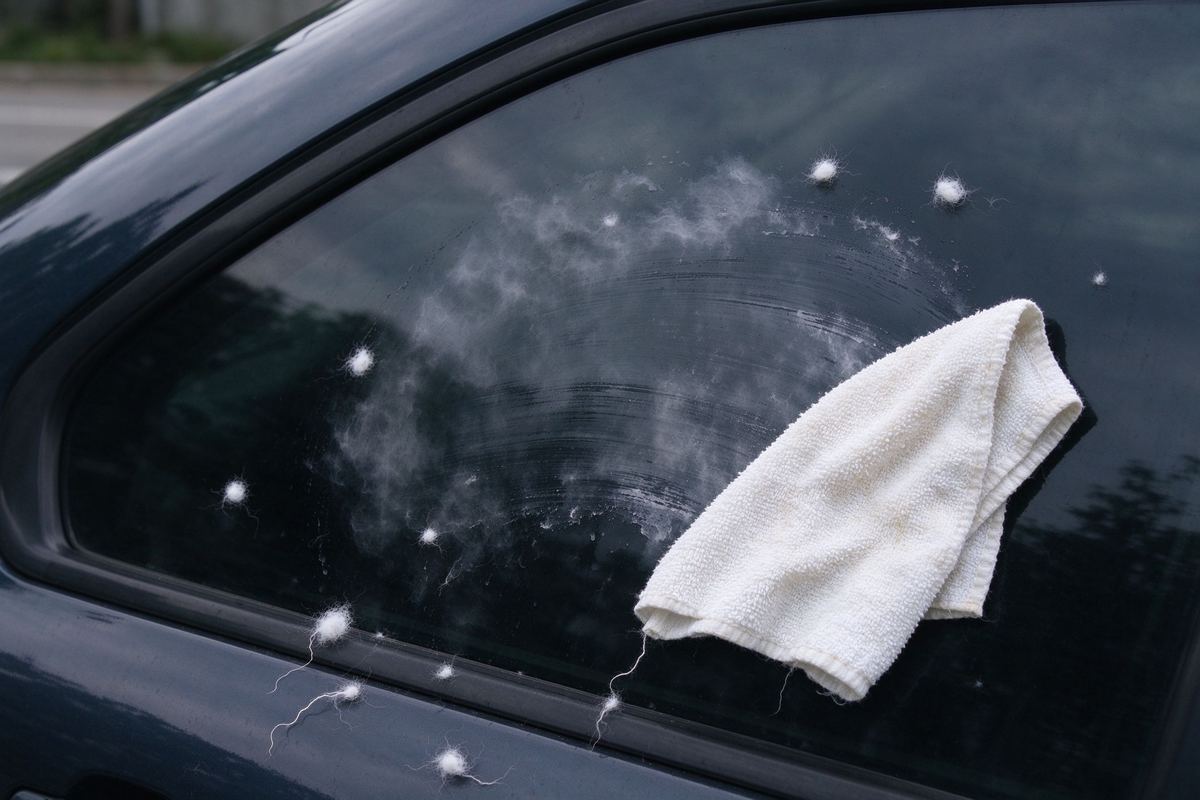
Most of the marks blamed on dirty glass are not dirt at all — they are what the cloth left behind. Cotton terry sheds fibers into every wipe, and a rag that has lost its absorbency simply pushes water around the panel until it dries into a film. That film is the haze you see against low sun, and it usually takes a second pass to find out it was never going to come off.
- ✓Cotton sheds lint. Every wipe leaves loose fibers behind, and on dark glass they show up worst when the sun is low.
- ✓Water gets moved, not lifted. A saturated rag smears a film across the panel that dries into streaks rather than a clear surface.
- ✓Rough edges drag grit. A cut hem, a sewn-in label or a stiff paper edge carries dust across the paint instead of picking it up.
- ✓Paper towels do not hold together. Wet strength runs out halfway across a windscreen, and the fibers stay on the glass.
Dense enough to lift, soft enough to trust on glass.
Microfiber is not a woven cloth. Each fiber is split into strands many times finer than a human hair, and that is what changes the result: instead of smearing a surface, the pile grabs dust, water and polish residue and holds them inside the cloth. At 300 GSM there is enough of that pile to work with — thick enough to lift a windscreen in one pass, thin enough to fold into a pad for a door shut or a wheel spoke.
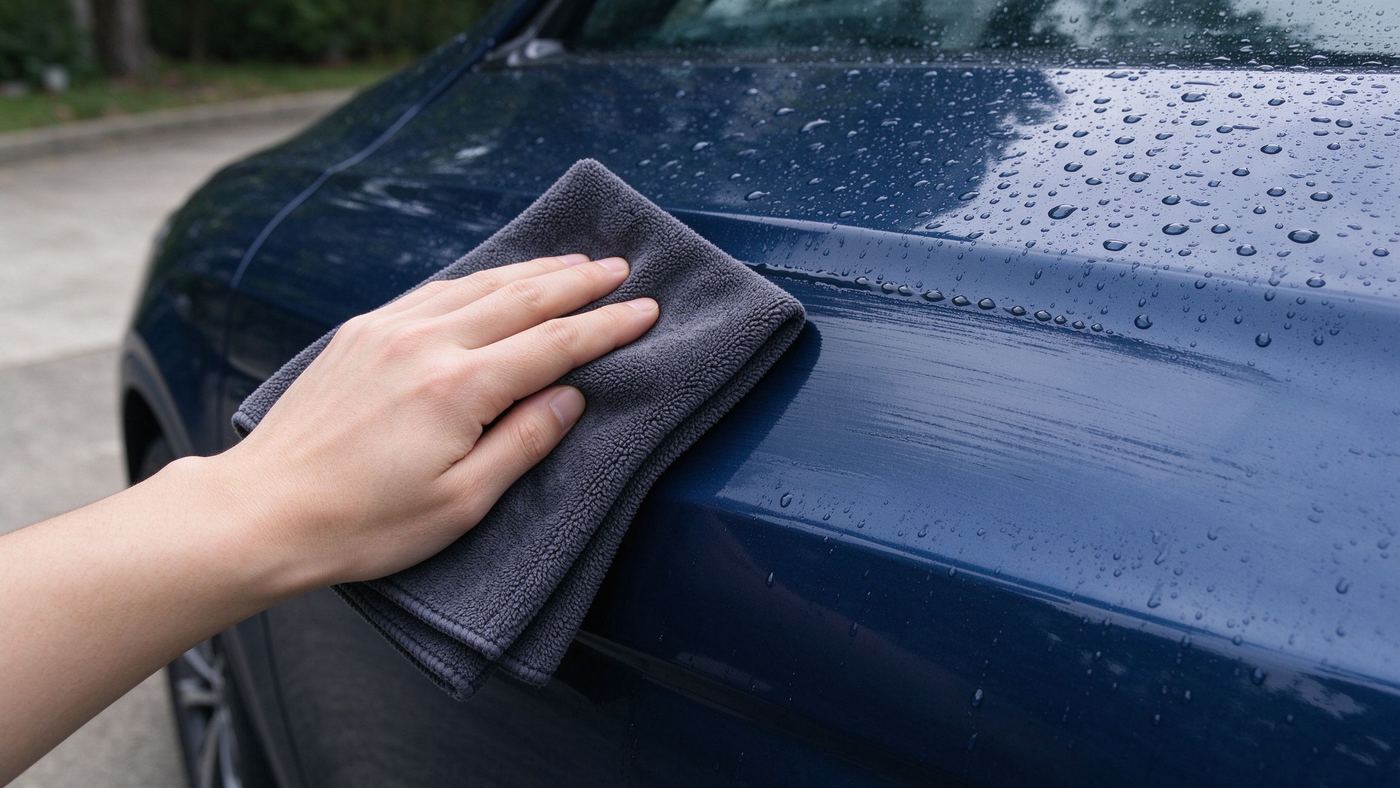
One pass: the water lifts off the paint and disappears into the pile.
Split fibers, dense pile, stitched edge.
Three things decide whether a microfiber cloth works or just moves dirt around: what the fiber is made of, how much pile there is per square meter, and how the edge is finished. Here is what each of them does on this cloth.
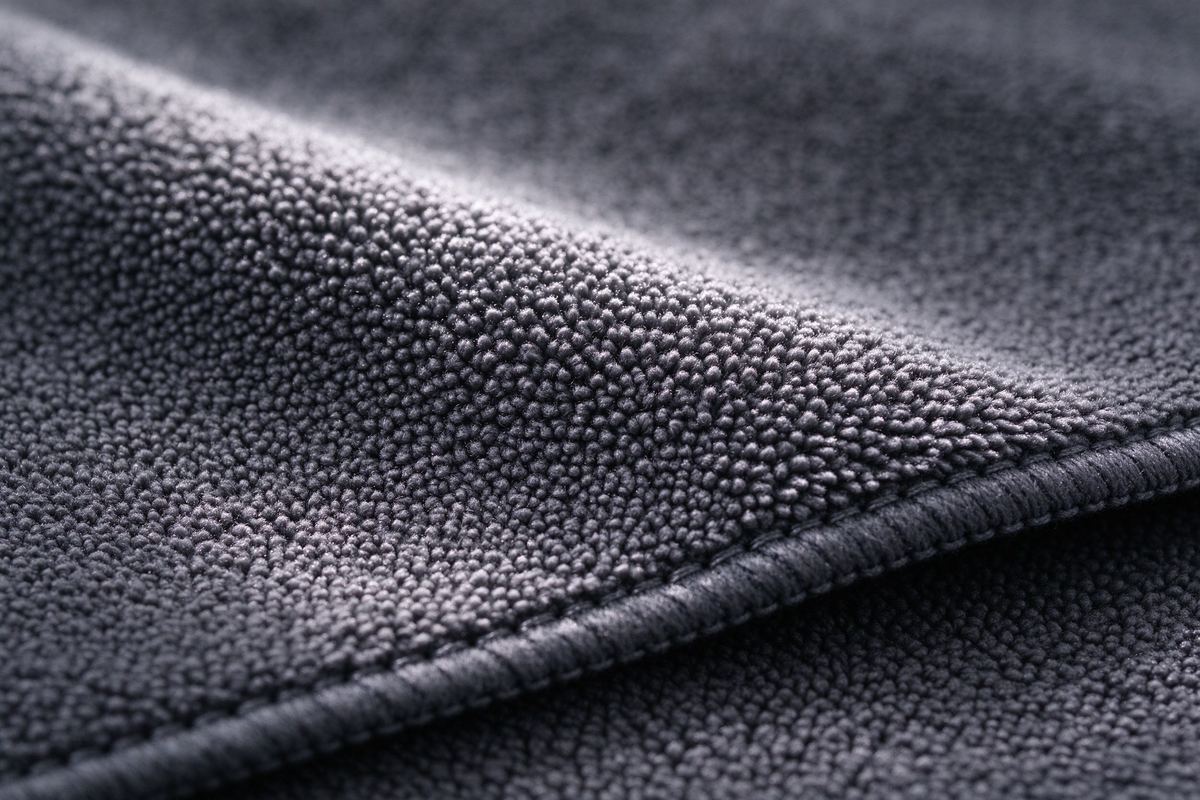
The pile and the hem under magnification — thousands of fine loops, stitched all the way round.
- ✓80/20 split microfiber. 80% polyester and 20% polyamide: the polyamide splits into the finest strands and does the lifting, while the polyester gives the pile its shape and its strength.
- ✓300 GSM pile. Dense enough to hold real dust and water rather than spreading it thin, and short enough to reach into the grain of a dashboard.
- ✓Overlocked hem, no label. Nothing sewn into the cloth and no cut edge to fray, which is where most scratching actually starts.
- ✓16 × 16 in. Fold it into quarters for glass and trim, or use it flat for a door shut, a sill or a wheel.
Four jobs, one cloth.
These are general-purpose cloths, and general purpose is the point: the same cloth handles glass, trim, the awkward corners and the product residue, so you are not hunting through a drawer for the right one.
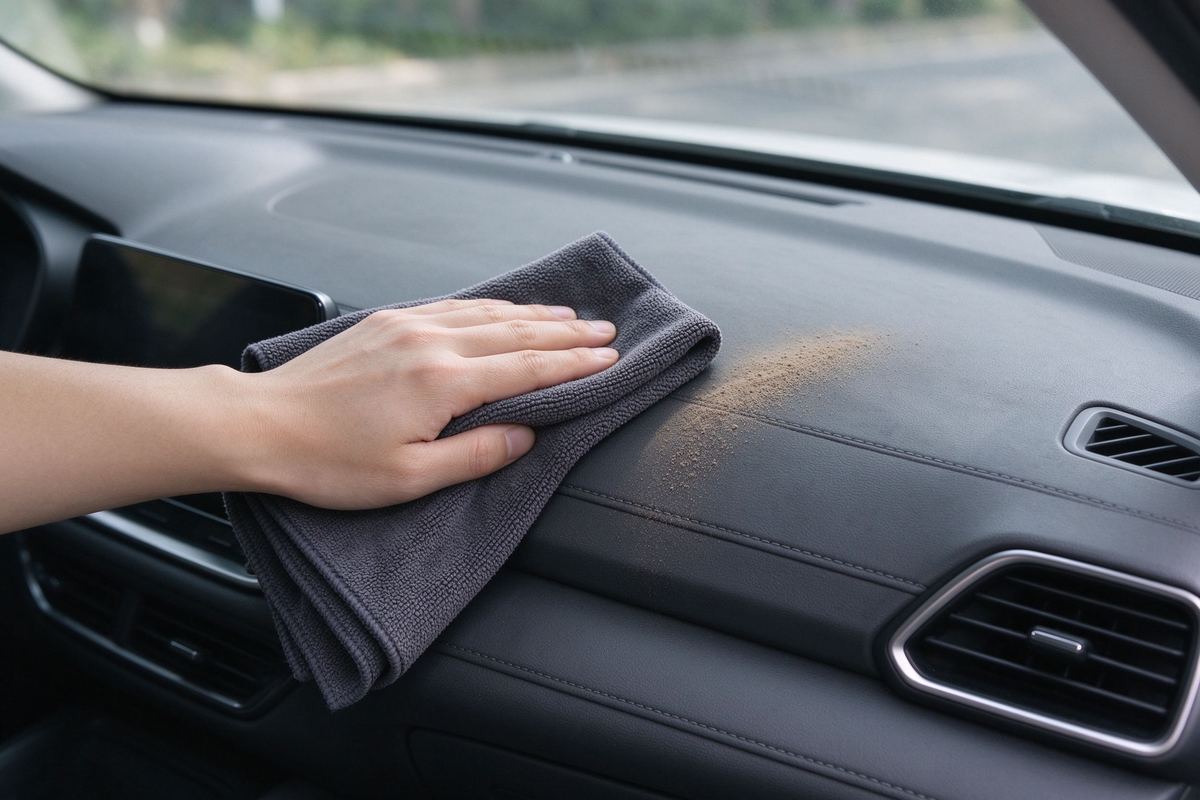
Dust out of the grain of the dash, not pushed into the next corner.
What 300 GSM is — and what it is not.
GSM is grams per square meter: the weight of the fabric, and the quickest way to tell two microfiber cloths apart. Heavier means a deeper pile and more water held, but also a cloth too thick to fold into a windscreen corner. Here is where these cloths sit.
| Fabric weight | What it is for | In this pack? |
|---|---|---|
| 200–350 GSM | Light, general purpose | Yes — these three cloths |
| 350–500 GSM | Mid weight, all-round | No — a step thicker, for everyday interior work |
| 500–800 GSM | Dense pile | No — for lifting wax and polish off paint |
| 800–1200 GSM | Plush, high absorbency | No — the grade used to dry a whole car |
Microfiber, cotton, or paper.
All three will get a windscreen wet. They part company on what they leave behind, and on how many times you can reach for the same cloth.
| Microfiber 3-pack (these) | Cotton terry towel | Paper towel | |
|---|---|---|---|
| Lint on glass | Knitted loop pile — nothing to shed | Loose fibers come off onto the glass | Paper fibers left behind as it breaks up |
| What it does with water | Lifts it into the pile and holds it | Pushes a film around until it dries | Smears and falls apart once wet |
| Edge | Overlocked hem, no label sewn in | Cut hem and a sewn-in care label | Rigid edge that drags grit across the panel |
| Reuse | Machine washable, and reusable for a long time | Washable, but stays linty | One use, then it goes in the bin |
| Cost per wipe | A few cents, over years of washes | Cheap until it starts shedding | Cheapest to buy, most expensive per car |
| Best at | Glass, trim, door shuts and polish removal | Soaking up large spills in bulk | Grease and mess you want to throw away |
Every number, in one place.
Size, weight and fiber blend are what matter here, so they are all listed below — along with what these cloths are not meant for.
| Specification | Value |
|---|---|
| Material | 80% polyester / 20% polyamide split microfiber |
| Fabric weight | 300 GSM (approx.) |
| Size | 16 × 16 in (40 × 40 cm) each |
| Edge | Overlocked hem all the way round, no label sewn in |
| Color | Charcoal gray |
| Pile | Short plush, low lint |
| Absorbency | Lifts water and dust into the pile rather than pushing them across the surface |
| Safe on | Paint, glass, chrome, plastic and rubber trim, screens |
| Best for | Glass, dashboards and trim, door shuts and sills, wheels, wiping off polish and wax |
| Not intended for | Hot surfaces such as exhausts, and not a substitute for a plush 800–1200 GSM drying towel when drying a whole car |
| Washing | Machine wash separately from cotton, cool to warm water up to approx. 104°F (40°C), liquid detergent, extra rinse |
| Never use | Fabric softener, dryer sheets, bleach or powder detergent |
| Drying | Air dry, or tumble on low or no heat |
| Quantity | 3 cloths per pack |
charcoal gray, 16 × 16 in (40 × 40 cm)
Wash the cloths before first use.
Four rules, and they last for years.
Almost every microfiber cloth is ruined in the wash rather than on the car. Nothing here is complicated — it is one load of laundry, done the right way round.
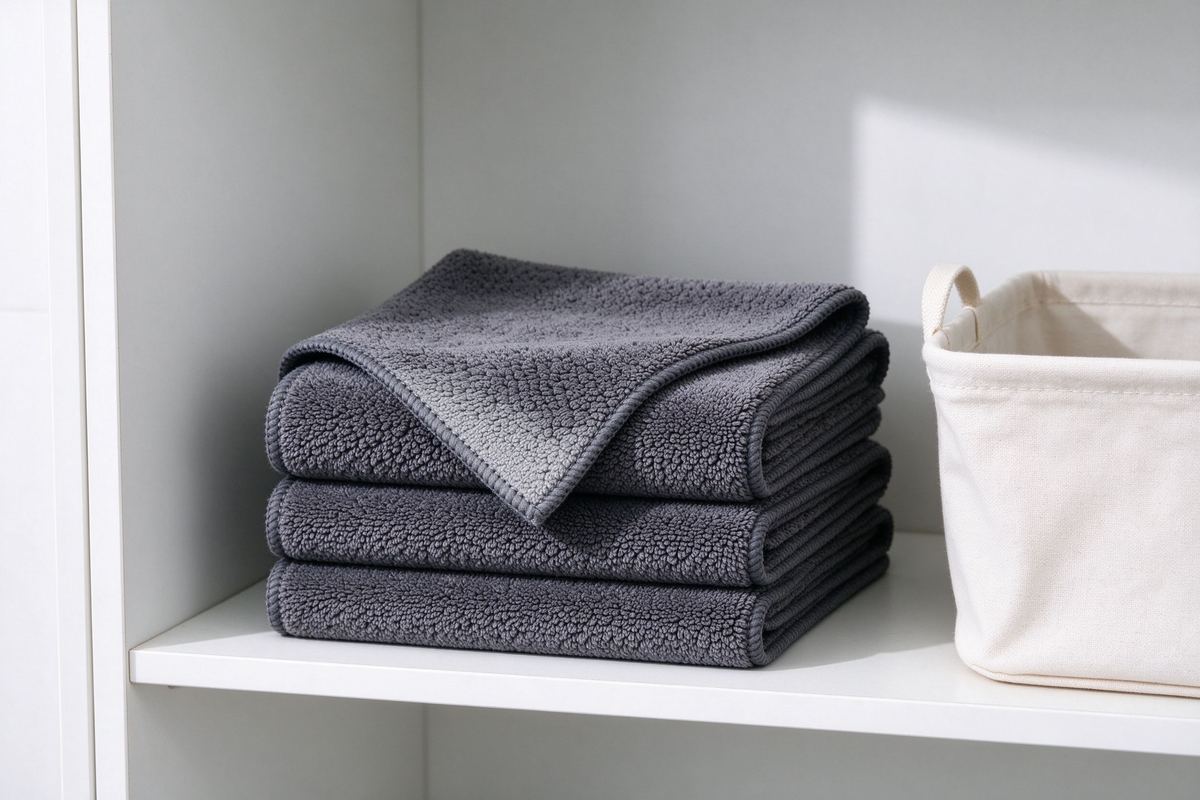
Washed, dried and stacked away — the routine that keeps a cloth working.


Reviews
There are no reviews yet.